




Secure payment
100% secure purchase and payment

Returns
14 days to return your order in physical store

Deliveries
Delivery on working days

3 year warranty
More warranty *
Arcas Gruber certified safes provide independently tested burglary resistance under recognised standards, with documented classifications for insurance compliance and professional specification, plus optional dual protection for fire when required.


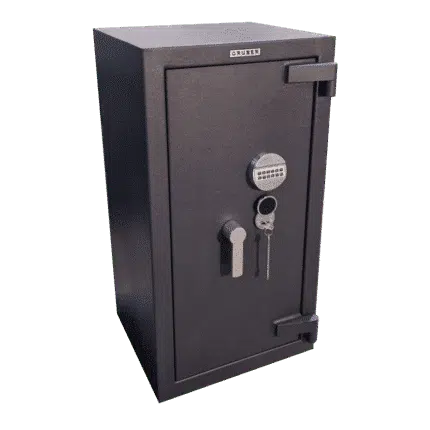


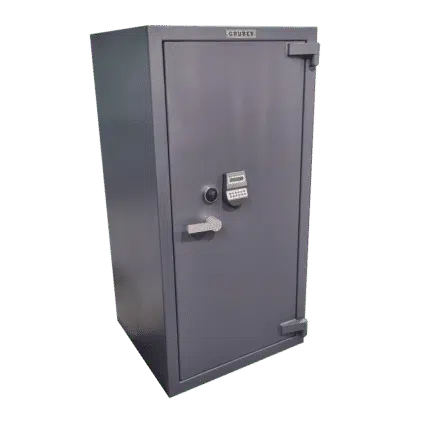


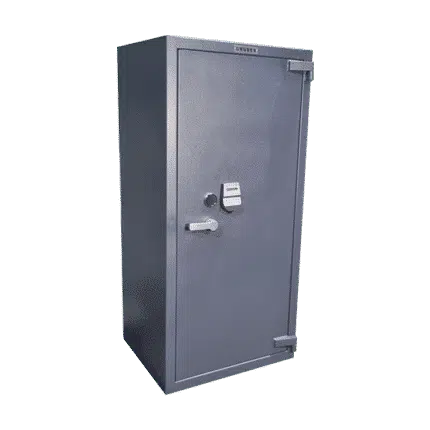


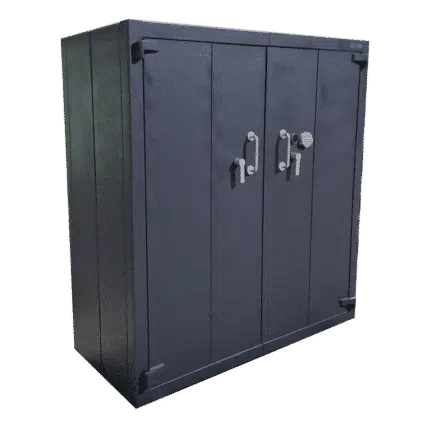
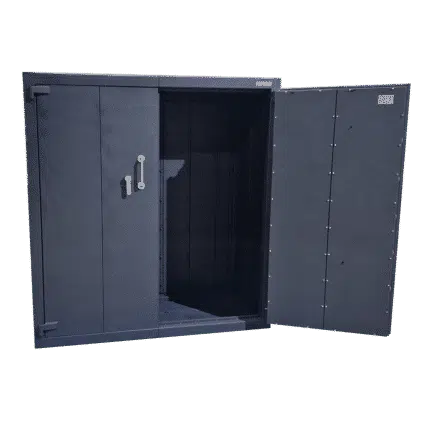


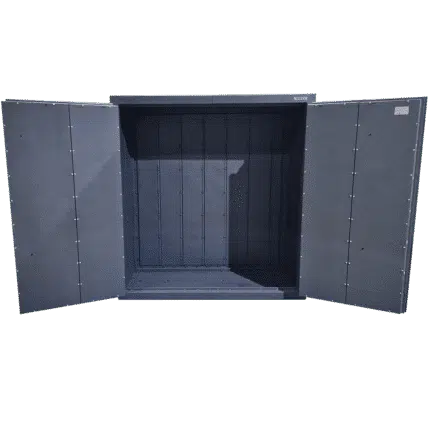
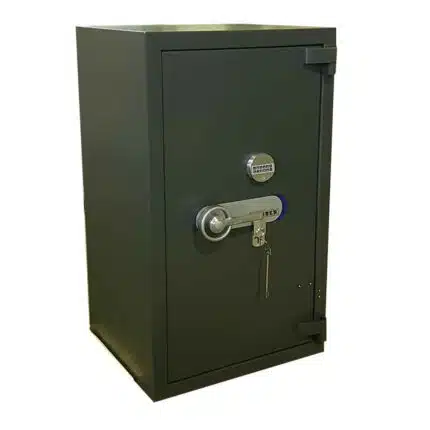
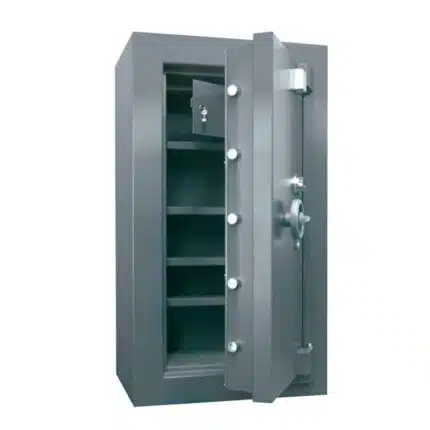
Arcas Gruber certified safes are designed for users who require documented, independently tested resistance levels for burglary protection and, where applicable, additional fire protection. Certification matters when you need measurable performance for insurance compliance, professional environments, regulated operations or higher-risk residential protection.
A certified safe is not defined by marketing claims. It is defined by tested performance under a recognised standard, a documented classification, and a product identification plate that corresponds to the test scope. When your risk profile or insurer requires a proven resistance level, certified solutions provide clarity for specification and accountability.
Certification typically involves independent testing in controlled conditions using defined tool sets and attack methods. The result is a verified classification that helps you select a safe according to exposure level, internal policies and insurance requirements.
Certified safes are supplied with documentation that supports professional procurement and compliance workflows. This is especially relevant for businesses, institutions and environments where audits or insurer validation can occur.
Many certified safes are tested under UNE EN 1143-1, which classifies burglary resistance based on defined attack testing. The appropriate class should be selected based on the value being protected, the operating environment and insurer requirements.
Fire protection is tested separately from burglary resistance. If you require both, the safe should be specified as a dual-protection solution, combining burglary certification with a relevant fire resistance standard depending on the stored items (documents vs. sensitive media).
Installation quality is a core part of real-world security. In many scenarios, correct anchoring is required to reduce removal risk and to align with insurance expectations. Certified safes should be installed according to the manufacturer’s instructions and the building substrate, with anchoring planned as part of the project specification.
A certified safe has documented performance verified through independent testing under a recognised standard and a corresponding classification. A non-certified safe may provide practical security, but it does not provide the same level of verified resistance or traceable documentation.
No. Fire resistance is tested separately. If fire exposure is part of your risk profile, you should specify a model with a recognised fire resistance classification in addition to burglary certification.
No. Installation is critical. Anchoring and correct placement strongly affect real-world outcomes and may also be required to align with insurer conditions.
Lock changes should only be performed using compatible certified locking components and approved procedures so the overall specification remains aligned with the safe’s documented configuration.
Start with the value and criticality of what you store, your exposure level, and insurer requirements. If you need guidance across installation formats, compare wall, floor and fire protection categories as part of the selection process.
If you need built-in installation formats, review wall safes and floor safes. For thermal protection, review fire proof safes. To explore the full catalogue, visit safes.
100% secure purchase and payment
14 days to return your order in physical store
Delivery on working days
More warranty *
No account yet?
Create an AccountTo provide the best experiences, we use technologies such as cookies to store and/or access device information. Consenting to these technologies will allow us to process data such as browsing behavior or unique IDs on this site. Not consenting, or withdrawing consent, may adversely affect certain features and functions.

Thank you for your interest in Gruber. Request more information and our team of safe and security experts will contact you as soon as possible. Thank you very much.