




Secure payment
100% secure purchase and payment

Returns
14 days to return your order in physical store
Deliveries
Delivery on working days

3 year warranty
More warranty *
Arcas Gruber security safes provide practical protection for valuables in homes and businesses, with controlled access options, anchoring-focused installation and models suited to everyday use.

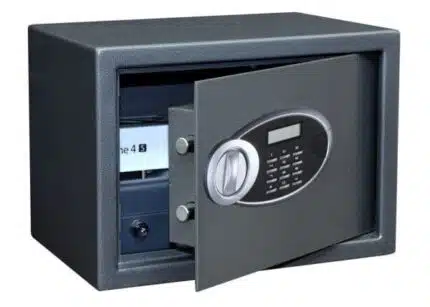


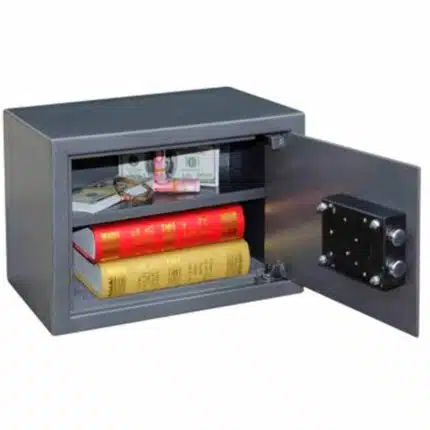
Arcas Gruber security safes are designed for practical protection of cash, documents and valuables in residential and professional environments. This category focuses on strong day-to-day security solutions where controlled access, correct anchoring and durable construction are the priorities.
Security performance depends on the overall system: the safe’s construction, the locking configuration, and—critically—the installation and anchoring method. Where higher risk profiles or insurance requirements apply, a certified model tested under UNE EN 1143-1 with the appropriate Grade may be required.
Security safes are specified to protect valuables against opportunistic theft and unauthorised access. The appropriate locking configuration should be selected based on who needs access, how often the safe is used and the required level of control.
Anchoring is one of the most important factors in practical security. Security safes should be fixed to a suitable structural surface to reduce removal risk. The installation approach depends on the safe format and the building substrate.
Depending on the model and access policy, security safes can be specified with key lock, mechanical combination, electronic lock or combined systems. The best option depends on operational needs, user accountability and whether redundancy is required.
Security safes are frequently specified for passports, jewellery, cash, keys and important documents where a reliable access system and solid anchoring are required.
For offices and private workspaces, security safes can protect confidential files, backup drives, contracts and sensitive items, especially where casual access must be reduced.
In shops and service environments, security safes are often used for controlled storage in back offices and restricted areas, supporting internal procedures and reducing exposure.
A security safe is typically specified for everyday protection and controlled access. A certified safe has been tested under a formal resistance standard such as UNE EN 1143-1 and assigned a Grade, which is often relevant for higher risk profiles and insurance requirements.
Yes. Anchoring to a suitable surface is strongly recommended to reduce removal risk and improve practical security.
The best lock depends on usage and access policy. Electronic locks are practical for frequent use, mechanical combinations can support long-term reliability, and combined configurations can add redundancy where required.
Yes. Security safes are commonly specified for offices and retail environments, especially for controlled access storage and back-office protection, provided the selected model matches the operational use case.
If the risk profile is higher or insurance requires tested burglary resistance, you should review certified solutions under UNE EN 1143-1.
For tested burglary resistance, review certified safes. For discreet built-in installation, review wall safes. To explore the complete range, visit safes.
100% secure purchase and payment
14 days to return your order in physical store
Delivery on working days
More warranty *
No account yet?
Create an AccountTo provide the best experiences, we use technologies such as cookies to store and/or access device information. Consenting to these technologies will allow us to process data such as browsing behavior or unique IDs on this site. Not consenting, or withdrawing consent, may adversely affect certain features and functions.

Thank you for your interest in Gruber. Request more information and our team of safe and security experts will contact you as soon as possible. Thank you very much.