




Secure payment
100% secure purchase and payment

Returns
14 days to return your order in physical store
Deliveries
Delivery on working days

3 year warranty
More warranty *
Arcas Gruber secret safes are designed for discreet installation to reduce detection risk, with controlled access options and concealed formats for residential and professional use.
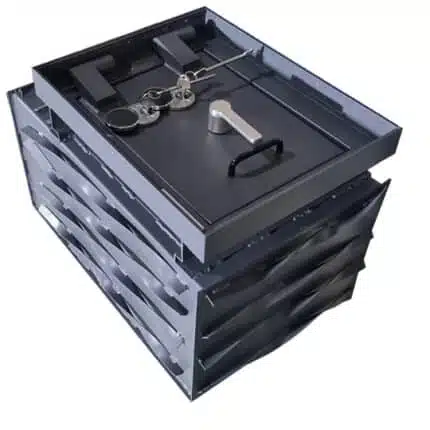
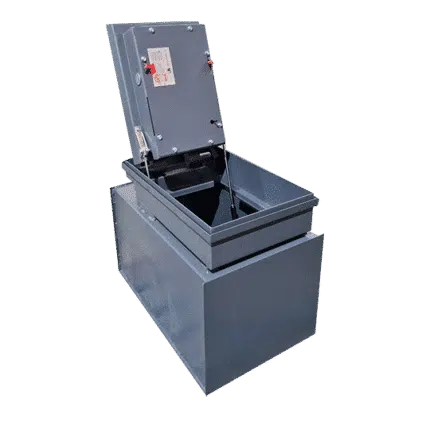
Arcas Gruber secret safes are designed for scenarios where discretion is a primary security objective. By reducing visibility and limiting the likelihood of detection, secret safes can add an effective practical layer of protection for valuables, documents and sensitive items in residential and professional environments.
Discretion does not replace physical security. The best results come from combining a concealed installation with appropriate construction, controlled access and correct fixation to the building structure. For higher risk profiles or insurance requirements, certified burglary resistance under UNE EN 1143-1 may be required, depending on the application and the selected model.
In many burglary scenarios, attackers prioritise speed and visible targets. A concealed safe can reduce the chance of being found during a short time window, particularly when integrated into the structure or furniture in a discreet way.
Secret safes are commonly specified for concealed placement in floors, walls or furniture integration where the safe remains out of sight during daily use. The key requirement is that concealment does not compromise secure fixation and normal access.
For effective security, secret safes should be installed with solid fixation to a suitable structural surface. The installation method depends on the building substrate and the safe format, with the objective of reducing removal risk while maintaining concealment.
The most effective concealed solutions are those that remain practical for the owner. Placement should allow comfortable access while keeping the safe out of sight during normal room use.
Depending on the installation and access policy, secret safes can be specified with different locking configurations such as key lock, mechanical combination, electronic lock or combined systems. The appropriate choice depends on usage frequency, user accountability and the required level of access control.
Secret safes are often used to store passports, jewellery, family documents, emergency cash and sensitive items where discreet placement improves practical security.
They can also be specified to protect confidential documents, backup drives or sensitive materials when visibility and casual access must be reduced.
In selected scenarios, concealed storage can reduce exposure for small daily cash holdings or sensitive items, provided operational access and internal procedures are clearly defined.
Concealment improves practical security by reducing detection, but physical security depends on construction, locking configuration and installation quality. For higher risk profiles, certified burglary resistance may be required depending on the application and model.
The best location depends on your building structure and daily access needs. The priority is a discreet position that still allows solid fixation to a suitable surface and practical access.
Fire protection depends on the selected model and specification. If fire exposure is a key concern, review fireproof safes as part of the risk assessment.
Many concealed installations are planned as fixed solutions. Moving a safe after installation may compromise both concealment and fixation quality, so relocation should be considered during the initial planning phase.
Secret safes focus on discretion. If your priority is built-in structural installation formats, review wall safes and floor safes for concealed installation approaches designed around those formats.
To compare installation formats and security approaches across the full catalogue, visit safes.
100% secure purchase and payment
14 days to return your order in physical store
Delivery on working days
More warranty *
No account yet?
Create an AccountTo provide the best experiences, we use technologies such as cookies to store and/or access device information. Consenting to these technologies will allow us to process data such as browsing behavior or unique IDs on this site. Not consenting, or withdrawing consent, may adversely affect certain features and functions.

Thank you for your interest in Gruber. Request more information and our team of safe and security experts will contact you as soon as possible. Thank you very much.