




Secure payment
100% secure purchase and payment

Returns
14 days to return your order in physical store

Deliveries
Delivery on working days

3 year warranty
More warranty *
Arcas Gruber video safes protect VDR and NVR recording equipment with secure enclosures designed for professional CCTV installations, controlled access and discreet integration.
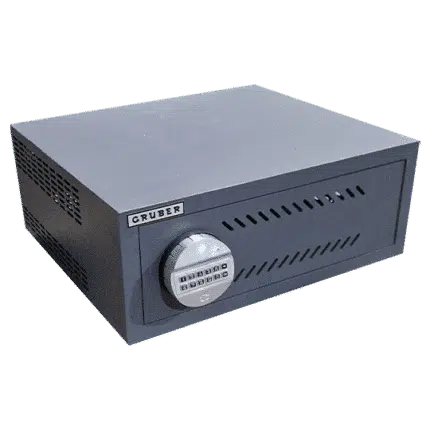
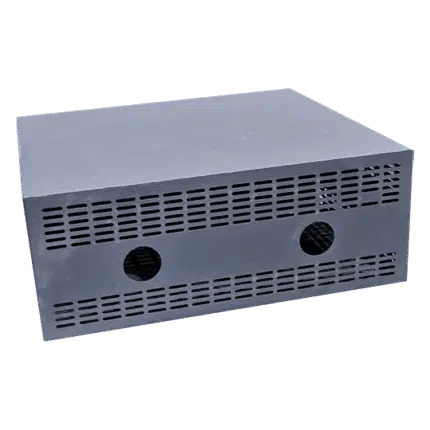
Arcas Gruber video safes are engineered to protect video recording equipment such as VDR and NVR units in environments where theft, tampering and forced access represent a real operational risk. These solutions are designed to provide a compact, high-resistance enclosure that secures recording hardware while maintaining practical access for maintenance and system continuity.
In many projects, the recorder is the critical point of failure: even when cameras remain in place, the loss or manipulation of the recording unit can compromise incident evidence and operational security. A dedicated video safe reduces exposure by physically protecting the recorder, reinforcing fixation and controlling access to connections and storage media.
Video safes are built with robust construction focused on resisting opportunistic attacks and delaying forced entry attempts. Access is managed through secure locking configurations adapted to the operational context, allowing maintenance access without leaving equipment exposed.
To preserve system integrity, video safes can incorporate protected cable paths and access points that maintain connectivity while limiting manipulation. This supports clean integration into existing CCTV architectures without compromising physical security around connectors and storage units.
Recording equipment often runs continuously. Depending on the installation requirements, ventilation solutions can be incorporated to support stable operating conditions while maintaining a secure enclosure.
Video safes are frequently used in banks, shopping centres, pharmacies and other commercial environments where the recording unit must be protected against theft and unauthorized handling.
In residential installations, video safes provide discreet physical protection for recorders placed in utility rooms, technical cabinets or home automation zones where concealment and access control are priorities.
Yes. Depending on the installation, video safes can be anchored to walls or integrated into technical cabinets and secure furniture, provided the fixing surface supports reinforced anchoring.
Video recorders can generate heat during continuous operation. Video safes can be specified with ventilation solutions suited to the installation requirements while maintaining physical protection.
Yes. Properly planned cable routing and protected access points allow the system to remain fully connected without exposing the recorder to manipulation.
No. Video safes are designed to protect recording equipment and related hardware. For cash-drop use cases, refer to deposit safes.
If you are defining broader protection for a site, you may also review certified safes for higher burglary resistance requirements and fireproof safes when fire exposure is part of the risk profile.
100% secure purchase and payment
14 days to return your order in physical store
Delivery on working days
More warranty *
No account yet?
Create an AccountTo provide the best experiences, we use technologies such as cookies to store and/or access device information. Consenting to these technologies will allow us to process data such as browsing behavior or unique IDs on this site. Not consenting, or withdrawing consent, may adversely affect certain features and functions.

Thank you for your interest in Gruber. Request more information and our team of safe and security experts will contact you as soon as possible. Thank you very much.