



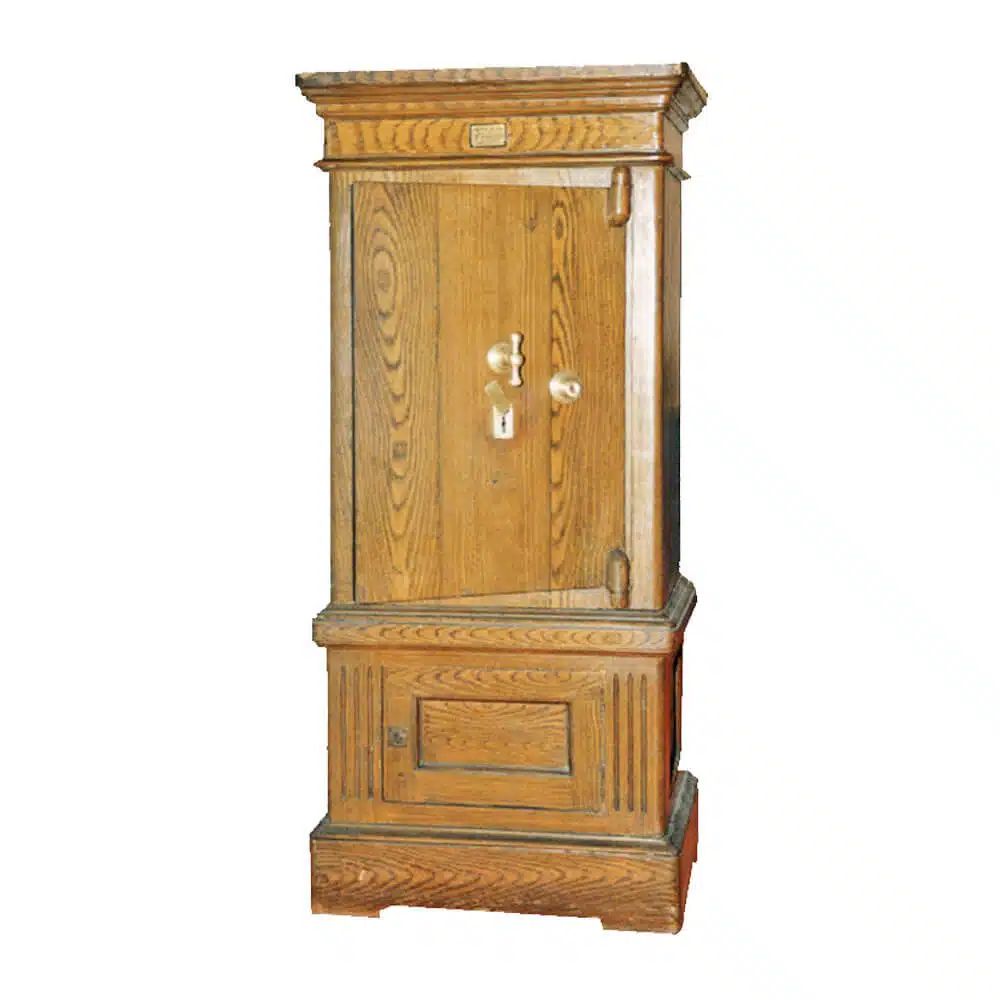
The history of safes dates back to ancient times, when simple wooden chests were reinforced with metal bands to protect valuables. These primitive forms of security were the precursors to what would become the sophisticated safes we know today.
Early Beginnings: Pre-Medieval Innovations
Before the Middle Ages, people began reinforcing wooden boxes with metal strips to deter theft. These early chests were often used by the wealthy to store money, deeds, and jewelry, though they offered little resistance to fire or brute force attacks.
18th Century: The Introduction of Steel
In the 1700s, a major leap forward occurred with the introduction of sheet steel safes. This was a turning point in the industry, allowing for far more durable and tamper-resistant designs. Steel became the new standard for manufacturers aiming to protect high-value goods.
19th Century: The Fireproof Revolution
As urban development increased, so did the threat of fire. In response, inventors began creating fire-resistant safes. Early models achieved this by saturating wood with potassium hydroxide and alum, and lining the safe with a mixture of clay, lime, graphite, and mica to resist high temperatures. These breakthroughs were patented and laid the groundwork for fireproof safe technology.
1835: The First Anti-Theft Safe
Security against theft took a major step forward in 1835 when Charles and Jeremiah Chubb patented the first anti-theft safe in England. Their invention introduced sophisticated locking mechanisms that helped prevent unauthorized access, marking a milestone in burglary-resistant designs.
1886: The Document Safe by Henry Brown
In the United States, Henry Brown, an African American inventor, patented a safe specifically designed for storing important documents. This reinforced the idea that safes were not just for money and jewelry, but also critical for protecting legal papers, records, and private information.
20th Century: The Rise of Industrial Safe Manufacturing
In 1908, the company Arcas Gruber was founded in Spain by Matths Gruber, a visionary German entrepreneur. His contributions modernized the concept of the security safe, bringing industrial-level engineering and certifications to the Spanish market. The legacy of Arcas Gruber continues to this day, with state-of-the-art safes manufactured under the highest European standards.
Modern Era: Certified Safes, Biometrics, and Beyond
Today, safes are not just strong—they’re intelligent. Modern models include electronic locks, biometric readers, and certifications under strict European regulations like UNE EN 1143-1. Whether for residential, commercial, or governmental use, modern safes are designed to withstand not only physical attacks but also fire, water, and even cyber threats in some cases.
From humble wooden boxes to advanced vaults, the evolution of safes tells a story of innovation, adaptation, and an enduring human need for protection.